Just Purification

Continuous Processing In Biopharmaceutical Industry
Continuous processing on benchtop scale is sufficient to serve as a solution to clinical manufacturing for biopharmaceuticals
CONTINUOUS MANUFACTURING (CM)PROCESS INTENSIFICATION (PI)TECHNOLOGY TRANSFER
2/20/20263 min read
Continuous Processing in Biopharma: From Concept to Deployment
For years, continuous processing has been discussed as the future of biopharmaceutical manufacturing. The technical benefits are clear. Steady-state operation. Smaller equipment. Better process control. Lower resin consumption. Improved consistency.
Yet adoption has lagged.
Why? Because most organizations still operate in facility-bound, batch-oriented environments. Converting to continuous has often meant new development work, new infrastructure, and new risk at the wrong stage of a program.
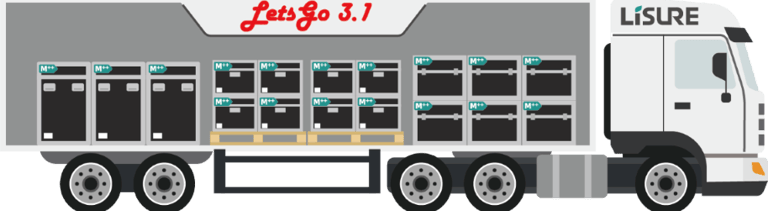
That gap between promise and practicality is what LetsGo 3.1, the newest solution launched by Lisure, is designed to close.
LetsGo 3.1 brings continuous downstream processing into a deployable, clinical-ready platform. It does not require rebuilding your facility. It does not require re-developing your process. It replaces complexity with a standardized, automated system built for speed.
Below are the core challenges facing the industry today, and how LetsGo 3.1 addresses them directly.
The Clinical Manufacturing Bottleneck
The challenge:
Clinical manufacturing remains one of the longest poles in the development timeline. Building traditional infrastructure takes two to three years. During that time, programs wait. Capital is locked in. Pipeline velocity slows.
How LetsGo 3.1 addresses it:
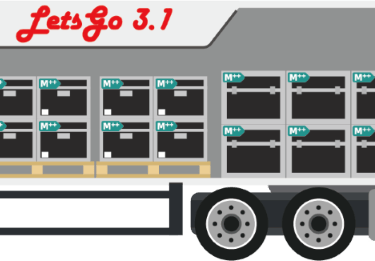
LetsGo 3.1 is deployed in approximately six months. It arrives as a fully enclosed, cGMP-compliant downstream production line. Instead of building a facility around the process, the process arrives ready to run.
Clinical trials can move at the speed of R&D, not construction schedules.
High Capital Commitment Before Clinical Proof
The challenge:
Traditional manufacturing demands large, upfront capital investment long before clinical success is proven. This concentrates financial risk early in development.
How LetsGo 3.1 addresses it:
The platform replaces permanent infrastructure with a re-deployable system. It requires less than half the capital and operational investment of traditional builds, with a much smaller footprint and minimized site construction.
Capacity can be added in parallel as programs advance, aligning investment with data.
Complexity of Transitioning to Continuous Processing
The challenge:
Continuous processing has often required significant process redevelopment. Teams hesitate to introduce new complexity while preparing for clinical manufacturing.
How LetsGo 3.1 addresses it:
LetsGo 3.1 implements continuous downstream processing directly from existing batch processes. No additional process development is required. Constant feed-in and constant product-out operation are built into the platform architecture.
Continuous processing becomes a deployment choice, not a research project.
Operator Variability and Manual Handling
The challenge:
Batch operations introduce variability through manual steps, buffer handling, and operator-dependent execution. This affects reproducibility and increases training burden.
How LetsGo 3.1 addresses it:
The system operates as a fully enclosed, automated platform with DCS control and S88 batch management. True one-click execution removes manual handling and reduces operator variability.
For MSAT and manufacturing leaders, this means predictable execution across sites and programs.
Infrastructure and Utility Constraints
The challenge:
CIP systems, large buffer preparation areas, and facility utilities drive complexity, cost, and long integration timelines.
How LetsGo 3.1 addresses it:
The platform requires no CIP utilities and includes continuous inline-dilution buffer preparation. Smaller columns and systems reduce footprint and infrastructure burden. Affinity resin consumption can be reduced by up to 50%, lowering consumable costs while supporting steady-state operation.
Site integration becomes simpler and faster.
Technology Transfer and Scale-Up Risk
The challenge:
Scaling from clinical to commercial manufacturing often introduces redesign, revalidation, and new uncertainty. Late-stage tech transfer remains a common source of delay.
How LetsGo 3.1 addresses it:
The platform is built for copy-and-paste tech transfer. The same architecture used for clinical production can scale toward commercial manufacturing. Parallel deployment enables expansion without reengineering the process.
Manufacturing evolution becomes replication, not reinvention.
Continuous Processing That Is Finally Practical
Continuous manufacturing in biopharma is no longer just a strategic aspiration. With LetsGo 3.1, it becomes a deployable, controlled, and scalable reality.
The industry’s most persistent challenges—long build timelines, capital intensity, process variability, infrastructure complexity, and scale-up risk—are addressed in a single integrated platform.
For leaders responsible for CMC strategy, MSAT execution, or clinical manufacturing delivery, the question is no longer whether continuous processing works. It is whether manufacturing should continue to be the bottleneck in drug development.
LetsGo 3.1 provides a clear answer.