Just Purification

Transformative Impact Of LetsGo 3.1 in Future Pharmaceutical Industry
LetsGo 3.1 CM turnkey solution has a revolutionary impact on speed of building clinical manufacturing capacity in drug development pipeline for small and middle sized pharmaceutical companies
CONTINUOUS MANUFACTURING (CM)TECHNOLOGY TRANSFER
5/10/20263 min read
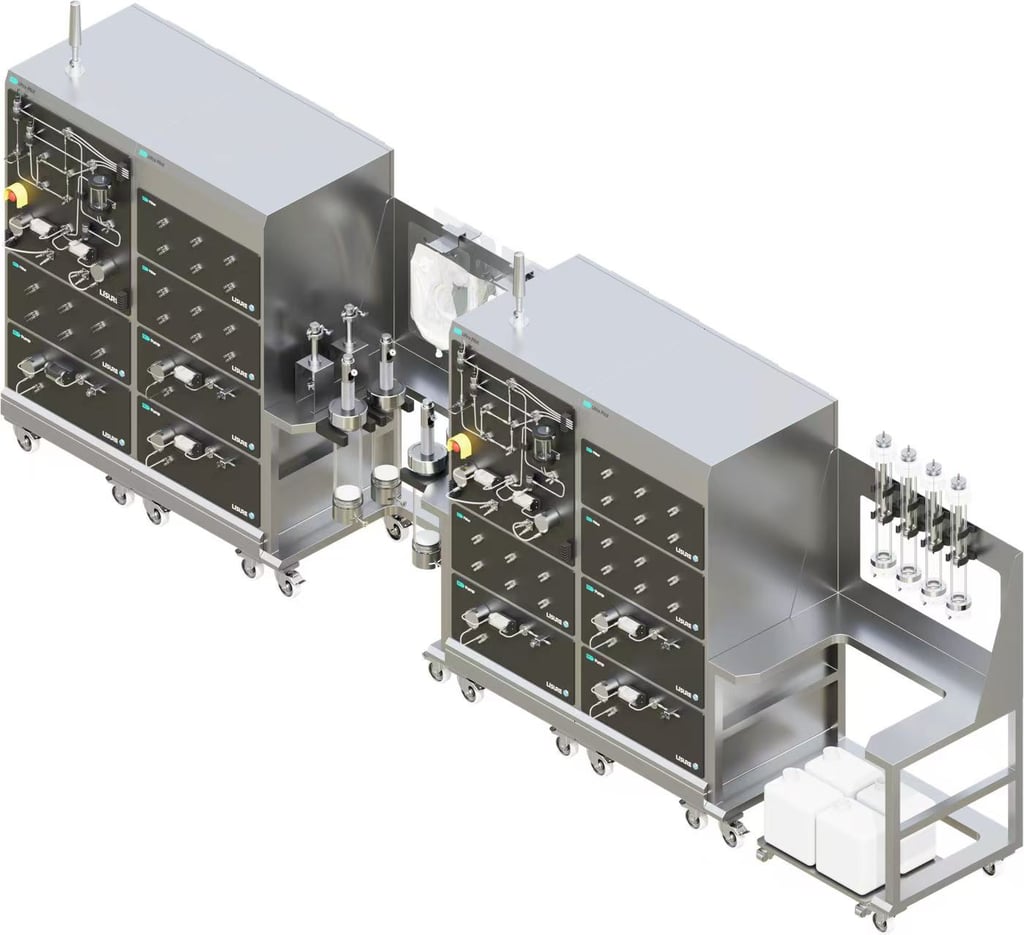
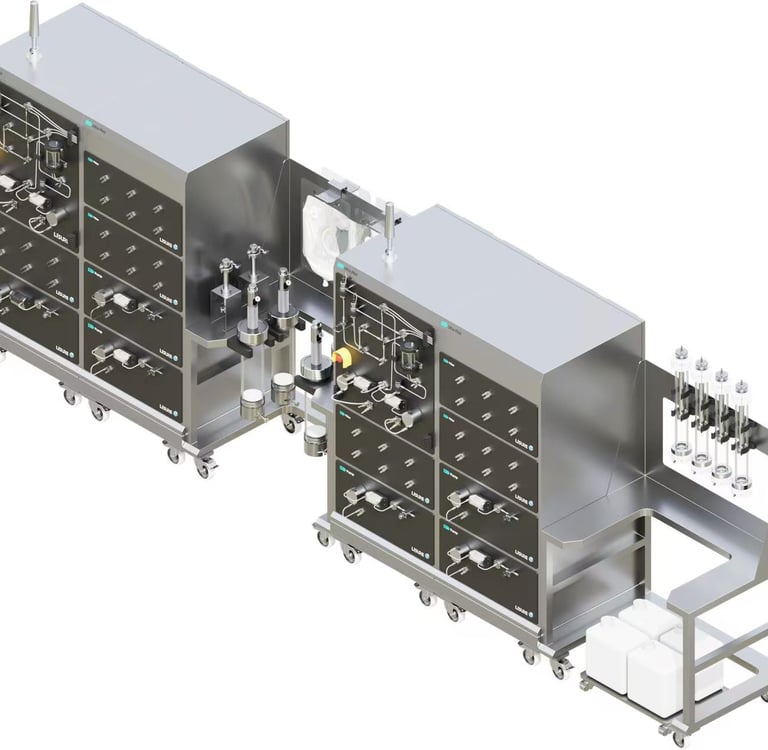
Continuous Processing and the Future of Clinical Manufacturing
The pharmaceutical industry has spent decades optimizing discovery, biologics engineering, and clinical science. Yet one part of the pipeline continues to slow everything down: manufacturing infrastructure.
Clinical manufacturing remains one of the most time-consuming and capital-intensive stages of drug development. Building facilities, installing equipment, validating systems, and preparing production environments often takes years. During that time, promising therapies wait for manufacturing readiness before they can advance into clinical studies.
This is why continuous processing matters.
Continuous manufacturing is not simply a more efficient production method. For clinical manufacturing, it represents a structural shift in how the entire drug development pipeline can operate.
And platforms such as LetsGo 3.1, developed by Lisure, may ultimately redefine what future pharmaceutical manufacturing looks like.
Continuous Processing Changes More Than Production Efficiency
Traditionally, continuous manufacturing has been discussed in terms of:
Higher productivity
Better equipment utilization
Reduced operating costs
Smaller manufacturing footprints
Improved process consistency
All of these benefits are real.
But in clinical manufacturing, the impact is even more significant because continuous processing enables something much larger:
The reduction, minimization, or elimination of traditional infrastructure dependency
That changes the economics and timelines of drug development itself.
The Infrastructure Problem in Drug Development
The current manufacturing model is heavily infrastructure-centric.
To support clinical production, companies often need:
New GMP suites
Utility systems
Cleanroom construction
Large buffer preparation areas
CIP systems
Equipment integration and validation
These projects can take two to three years before manufacturing even begins.
Meanwhile:
Clinical programs wait
Capital is locked up
Development timelines expand
Pipeline risk increases
In many cases, manufacturing infrastructure becomes the pacing factor for innovation.
This is increasingly incompatible with modern biopharma, where:
Pipelines are expanding rapidly
Clinical programs move faster
Personalized and targeted therapies require flexibility
Capital efficiency matters more than ever
The industry needs manufacturing systems that move with development, not behind it.
Why LetsGo 3.1 Matters
LetsGo 3.1 addresses this challenge directly.
Rather than building manufacturing capability into a permanent facility, LetsGo 3.1 delivers manufacturing as a deployable platform.
It is:
A fully enclosed, cGMP-compliant downstream clinical manufacturing system
Built on continuous processing principles
Based on configurable M++ modular architecture
Deployable in approximately six months
Designed with minimal site construction requirements
Re-deployable across programs and locations
This changes the role of manufacturing infrastructure from fixed asset to operational capability.
That distinction is critical.
Clinical Manufacturing at the Speed of R&D
One of the biggest implications of LetsGo 3.1 is timeline compression.
In traditional models:
Process readiness and facility readiness are separate timelines
Clinical manufacturing depends on infrastructure completion
Scaling decisions must be made years in advance
LetsGo 3.1 aligns manufacturing more closely with the pace of R&D.
Continuous downstream processing with constant feed-in and constant product-out enables:
Faster operational readiness
Reduced process interruptions
Smaller equipment requirements
Streamlined process flow
Combined with turnkey deployment, this allows clinical manufacturing capacity to be introduced much earlier in the development cycle.
Clinical trials no longer need to wait for major construction projects.
A Shift from Facilities to Platforms
This may be the most important long-term implication for the pharmaceutical industry.
Historically, manufacturing has been facility-centric:
Build the plant
Install the process
Validate the infrastructure
Operate for years
LetsGo 3.1 supports a platform-centric model instead:
Deploy the manufacturing capability
Configure modules for the process
Scale through replication and parallelization
Re-deploy when priorities change
This introduces flexibility that traditional infrastructure cannot provide.
For future pharmaceutical pipelines, especially in biologics and advanced therapies, flexibility will become as important as scale.
Lowering the Barrier to Continuous Manufacturing
Continuous processing has historically faced adoption barriers:
Integration complexity
Validation concerns
Automation requirements
Process redevelopment risk
LetsGo 3.1 lowers these barriers through:
Integrated DCS control and S88 batch management
One-click automated operation
Inline buffer dilution
No CIP utility requirements
Standardized module-based design
Importantly, it enables continuous processing based on existing batch processes without requiring major additional process development.
This makes continuous manufacturing practical at the clinical stage, not just aspirational at commercial scale.
The Future Pharmaceutical Industry Will Be More Modular
The future biopharmaceutical industry is likely to look very different from today’s infrastructure-heavy model.
Manufacturing systems will increasingly need to be:
Faster to deploy
Smaller in footprint
Easier to replicate
More automated
More flexible across products and sites
The companies that succeed will not simply manufacture more efficiently. They will manufacture more adaptively.
Platforms like LetsGo 3.1 point toward that future.
Not because they improve one step in the process, but because they fundamentally change how manufacturing capability is created, deployed, and scaled.
Beyond Efficiency
The significance of LetsGo 3.1 is not only operational.
It represents a broader industry transition:
From batch thinking to flow-based manufacturing
From permanent infrastructure to deployable systems
From rigid facilities to configurable platforms
From manufacturing bottlenecks to manufacturing agility
Continuous processing has always promised better efficiency and lower cost.
LetsGo 3.1 demonstrates something even more important:
That continuous manufacturing can reshape the speed, economics, and structure of future drug development itself.