Just Purification

Overview Of Different Approaches Emerging in Biopharmaceutical Manufacturing
The industry went from using stainless steel equipment and hold vessels to using single-use bags, disposable columns, and plastic hold vessels. But the batch process operation remains the same. What will be the future?
CONTINUOUS MANUFACTURING (CM)PROCESS INTENSIFICATION (PI)
5/10/20263 min read
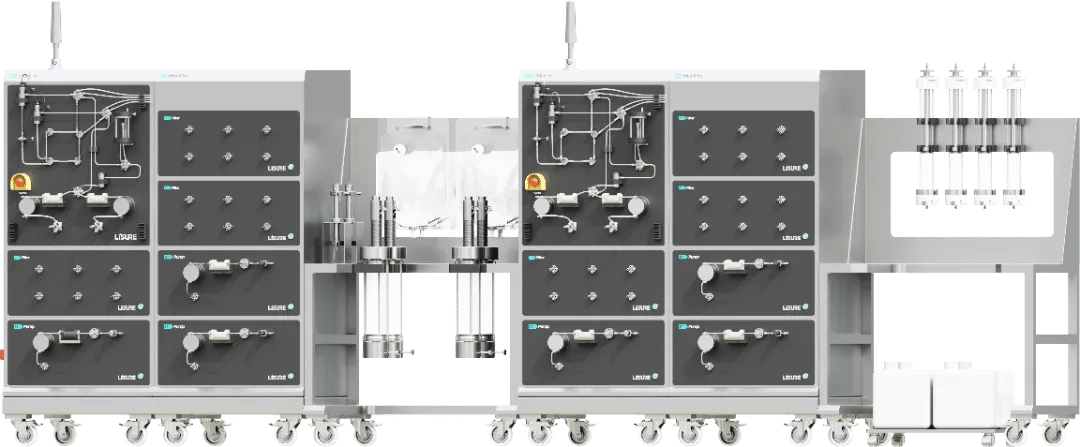
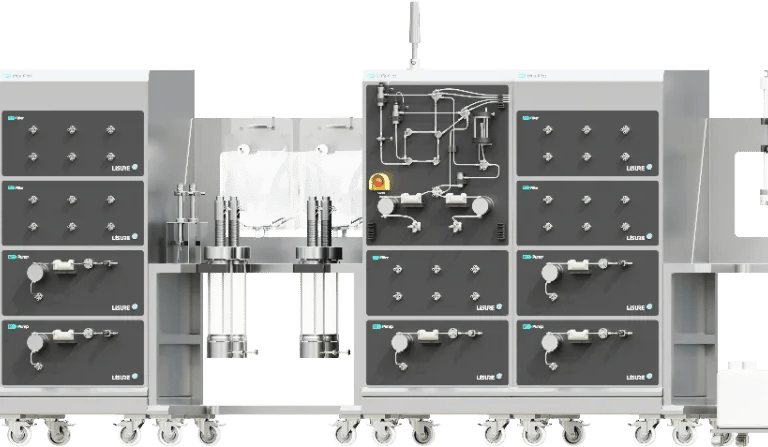
Platforming Clinical Manufacturing
The biopharmaceutical industry is undergoing a broader transition in how clinical manufacturing capacity is designed, deployed, and scaled. As pipelines expand and development timelines accelerate, manufacturers are increasingly exploring modular, intensified, and continuous processing approaches to improve flexibility, reduce deployment timelines, and simplify operations.
Across the industry, several platform models have emerged to address different parts of this challenge.
Solutions such as KuBio and FlexFactory focus on modular facility and single-use manufacturing infrastructure. BioSC emphasizes intensified downstream purification and continuous chromatography operations. There are many other series of platforms that are designed around continuous purification workflows for biologics manufacturing.
At the same time, new approaches are beginning to focus more directly on the clinical manufacturing bottleneck itself: the time, infrastructure, and operational complexity required to bring GMP production capacity online.
This is the context in which Lisure developed LetsGo 3.1.
A Shift Toward Deployable Clinical Manufacturing
Traditional clinical manufacturing models are often facility-centric. Production capability is tied closely to permanent infrastructure, including:
cleanroom construction
utility systems
equipment integration
and extended commissioning activities
Modular and continuous technologies across the industry are helping reduce some of this complexity. However, many systems still rely on facility-level implementation and site-specific integration.
LetsGo 3.1 was developed with a different architectural focus:
Delivering downstream clinical manufacturing as a deployable platform.
The system is designed as:
a fully enclosed downstream production platform
configurable through modular M++ process architecture
integrated with DCS control and S88 batch management
and deployable with reduced site construction requirements
The goal is to simplify how clinical manufacturing capacity is introduced and expanded
Different Platform Philosophies Across the Industry
Current manufacturing platforms generally emphasize different priorities.
Modular Facility Platforms
Solutions such as KuBio and FlexFactory emphasize modular facility deployment and single-use manufacturing flexibility. These approaches can help organizations accelerate facility implementation compared with conventional greenfield construction while supporting multiproduct operations.
Intensified Downstream Platforms
Systems such as BioSC focus heavily on intensified downstream processing and chromatography optimization. These technologies support continuous or semi-continuous purification strategies intended to improve resin utilization, process efficiency, and operational productivity.
Continuous Purification Platforms
Many other platforms are designed around continuous purification operations for biologics manufacturing and are even aligned with larger-scale continuous processing strategies.
Deployable Clinical Manufacturing Platforms
LetsGo 3.1 focuses specifically on downstream clinical manufacturing deployment. Its architecture is intended to support:
reduced infrastructure dependency
rapid deployment
modular process configuration
and scalable parallel expansion
Rather than centering primarily on facility construction or individual unit operations, the platform is designed around operational deployment of clinical manufacturing capability itself.
Clinical Manufacturing and Pipeline Agility
One of the major challenges in drug development is aligning manufacturing readiness with the pace of R&D and clinical execution.
In many development programs, manufacturing infrastructure requires substantial planning and long lead-time investment before clinical outcomes are fully understood. This can create timing and capital allocation challenges, especially for rapidly evolving pipelines.
Platform-based manufacturing approaches aim to improve agility by enabling:
faster deployment timelines
standardized process architecture
easier replication across sites
and simplified expansion strategies
LetsGo 3.1 was developed around this concept of operational flexibility. The platform supports configurable downstream process operations and parallel scale-out strategies that may help organizations align manufacturing investment more closely with program progression.
Standardization and Tech Transfer
Another area receiving increasing industry attention is standardization across clinical and commercial manufacturing stages.
Historically, tech transfer often involves:
process redesign
site-specific adaptation
new validation activities
and changes in equipment architecture
Modular platforms may help reduce some of this complexity by supporting more standardized operational frameworks.
LetsGo 3.1 uses modular hardware architecture combined with S88-based software modularization. This approach is intended to support process configuration through recombination of validated modules rather than complete system redesign.
As platform-based manufacturing evolves, this type of standardization may play an increasingly important role in supporting process continuity and operational consistency throughout development.
Continuous Processing as an Enabler
Continuous processing continues to gain attention across biopharmaceutical manufacturing because of its potential benefits in:
process consistency
equipment utilization
footprint reduction
automation
and operational efficiency
Industry adoption has historically been gradual due to integration, validation, and implementation complexity, particularly in downstream processing.
Platforms such as LetsGo 3.1 reflect a broader industry effort to make continuous processing more deployable at the clinical stage through:
integrated automation
inline buffer dilution
modular process architecture
and enclosed cGMP-oriented system design
Looking Ahead
The future of clinical manufacturing is unlikely to rely on a single model. Different organizations will continue adopting different combinations of:
modular facilities
intensified unit operations
single-use systems
continuous processing
and deployable manufacturing platforms
What is becoming increasingly clear, however, is that flexibility, speed, and standardization are becoming central design priorities for modern biopharmaceutical manufacturing.
LetsGo 3.1 represents one emerging approach within this broader industry transition: a modular, continuous, deployable platform intended to simplify downstream clinical manufacturing and better align manufacturing readiness with the pace of modern drug development.
This article is intended for general industry discussion purposes only. Product descriptions are based on publicly available information and may vary depending on specific configurations, implementations, and operational requirements.